Designing a Radar Based Precipitation Sensor: Engineering Trade-Offs from Concept to Deployment
Measuring precipitation accurately in real-world conditions is deceptively complex. Sensors must operate reliably across varying rainfall intensities, environmental noise, temperature extremes, and installation constraints, often with limited power and strict cost targets.
One of the most widely used approaches is the tipping bucket rain gauge. Its appeal lies in its simplicity: rainfall is collected in a small bucket mechanism that tips once a fixed volume is reached, producing a pulse that can be easily counted and logged. Tipping bucket sensors are inexpensive, low power, and well understood, which makes them a practical choice for many deployments
However, this simplicity comes with trade-offs. Tipping bucket sensors can struggle with high-intensity rainfall, require mechanical maintenance, and provide limited insight beyond accumulated precipitation. Environmental factors such as wind, debris, temperature, and installation quality can also significantly affect measurement accuracy.
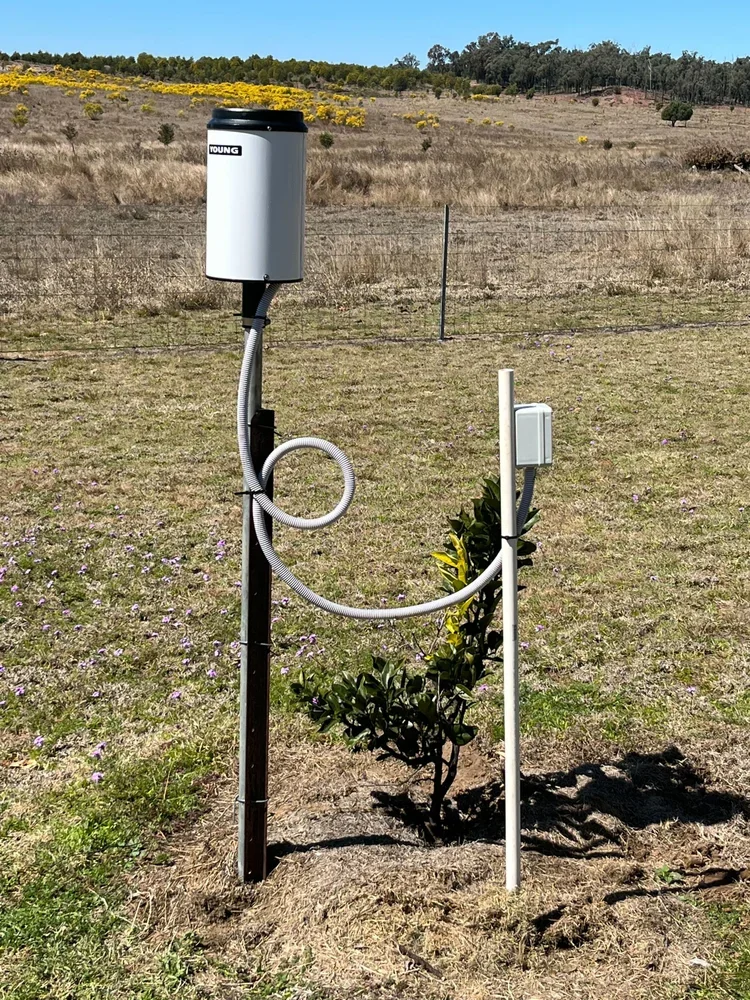
Decentlab tipping bucket DL-TBRG sensor
To address the limitations of simple mechanical gauges like the tipping bucket, a range of alternative precipitation sensors are used in modern systems. These include optical sensors, which detect drops using light beams; impact or acoustic sensors that infer rainfall by sensing droplet impacts; and radar based detectors that measure precipitation remotely using electromagnetic waves. Unlike tipping bucket mechanisms, which depend on collected water volume, these non-mechanical technologies provide faster response, lower maintenance, and richer information such as intensity and, in some cases, precipitation type; making them valuable for applications where accuracy and robustness matter.
Our client’s primary objective was to rapidly prototype a radar-based precipitation sensor in order to evaluate the technical scope of the problem and determine whether the approach would be viable for production. Early validation was essential to understand performance limits, integration complexity, and development risk before committing to a full custom design or manufacturing effort.
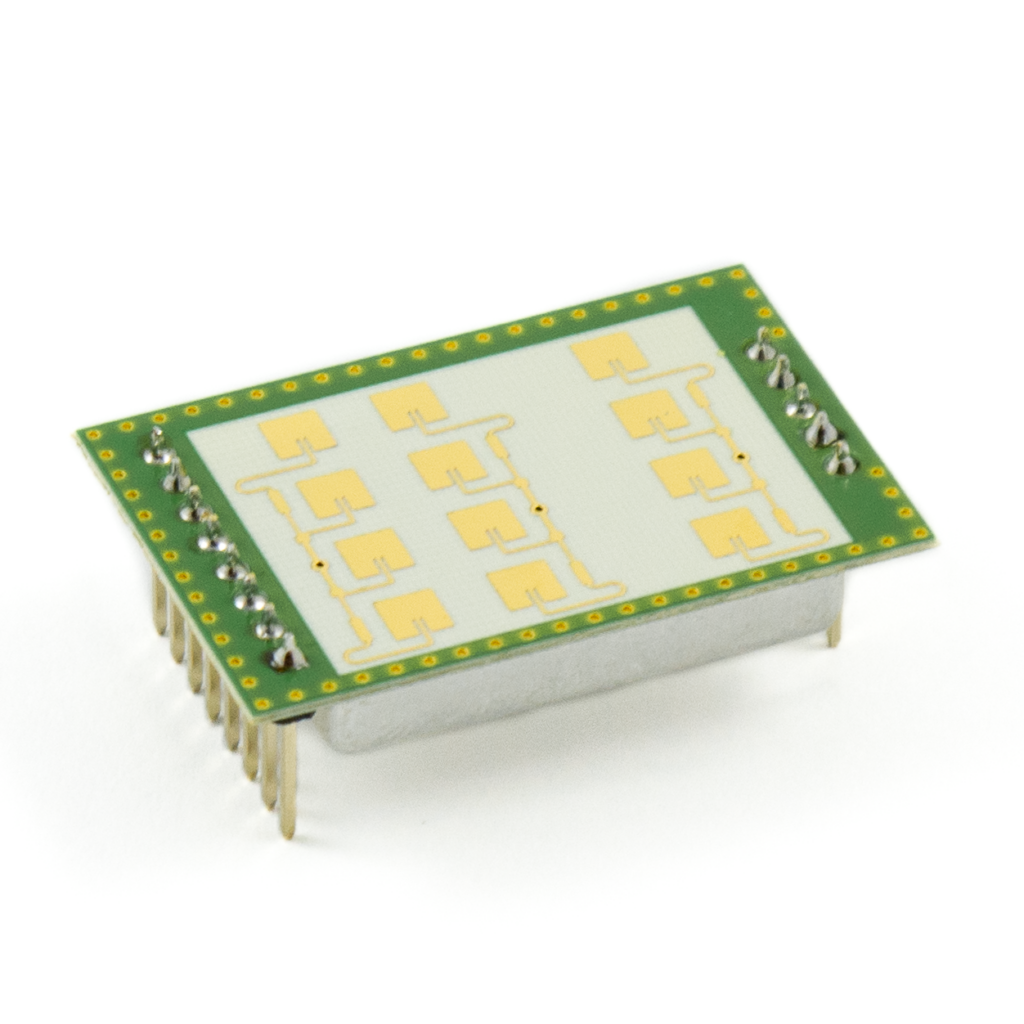
RF Beam Radar Module
To accelerate development and reduce early technical risk, we chose to partner with RFbeam to build a fast functional prototype based on their KLD-7 radar module. Rather than starting from a fully custom radar design, this approach allowed us to focus first on system-level behavior, signal characteristics, and data quality using a proven RF front end.
The KLD-7 module provided a compact, well-characterized platform that enabled rapid experimentation with antenna placement, signal processing algorithms, and environmental response. By leveraging an off-the-shelf radar module during the early phases, we were able to validate key assumptions, iterate quickly, and gather real-world data before committing to more specialized hardware.
This strategy shortened the development timeline while keeping future design paths open—allowing us to evaluate performance, understand trade-offs, and make informed decisions about customization, integration, and scalability as the system evolved toward a field-ready solution.
Prototyping the system exposed several non-trivial technical challenges, particularly the computational demands of real-time radar signal processing, including range FFTs, noise suppression, and precipitation classification under varying clutter and environmental conditions.
Radome design emerged as a critical factor, requiring careful selection of materials and geometry to control dielectric effects, minimize signal attenuation, and avoid pattern distortion across the operating bandwidth. Additionally, active thermal management proved necessary to mitigate condensation, icing, and wet-surface effects, all of which can significantly bias radar measurements if left unaddressed.
Through iterative hardware, firmware, and algorithm development, we validated that the radar-based approach can operate reliably across a wide range of weather conditions and demonstrated a clear, achievable path toward a rugged, production-ready sensor.
